We’ve just launched new features to help you work smarter!
Check them now!
Prefer to speak to us about our approach to Policy Management? Book a short call with one of our team to get answers to your questions.
For charities, trustees bear the responsibility for ensuring the good governance of the organisation. Effective governance involves:
Achieving this requires a balance between governance requirements and the financial constraints that charities often face. Policy Express offers a centralised, cost-effective Policy Management System specifically designed for charities, making it easier for those in operations and governance roles to maintain compliance efficiently.
We work with charities across the UK and USA in a range of fields, from hospice care and environmental protection to missionary work. Our clients vary in size, ranging from 50 to over 300 employees.
In this article, we will consider the six stages of the policy life cycle and any specific considerations that apply to charities.
Before implementing a policy management solution, policies are often grouped by department. While this approach may simplify management, it doesn’t necessarily benefit employees who need quick and easy access to relevant policies.
We recommend centralising policies in a policy hub to enhance accessibility.
This centralised approach simplifies access, improves adoption and helps maintain consistency across the organisation.
When we compare a charity to businesses with a similar number of employees, charities often face more complex approval processes. Policies may require review and sign-off from multiple stakeholders and from a committee for final approval.
For committees, it’s unrealistic for every member to log into a policy approval system for sign-off, this is where the value of a delegated authority comes into play.
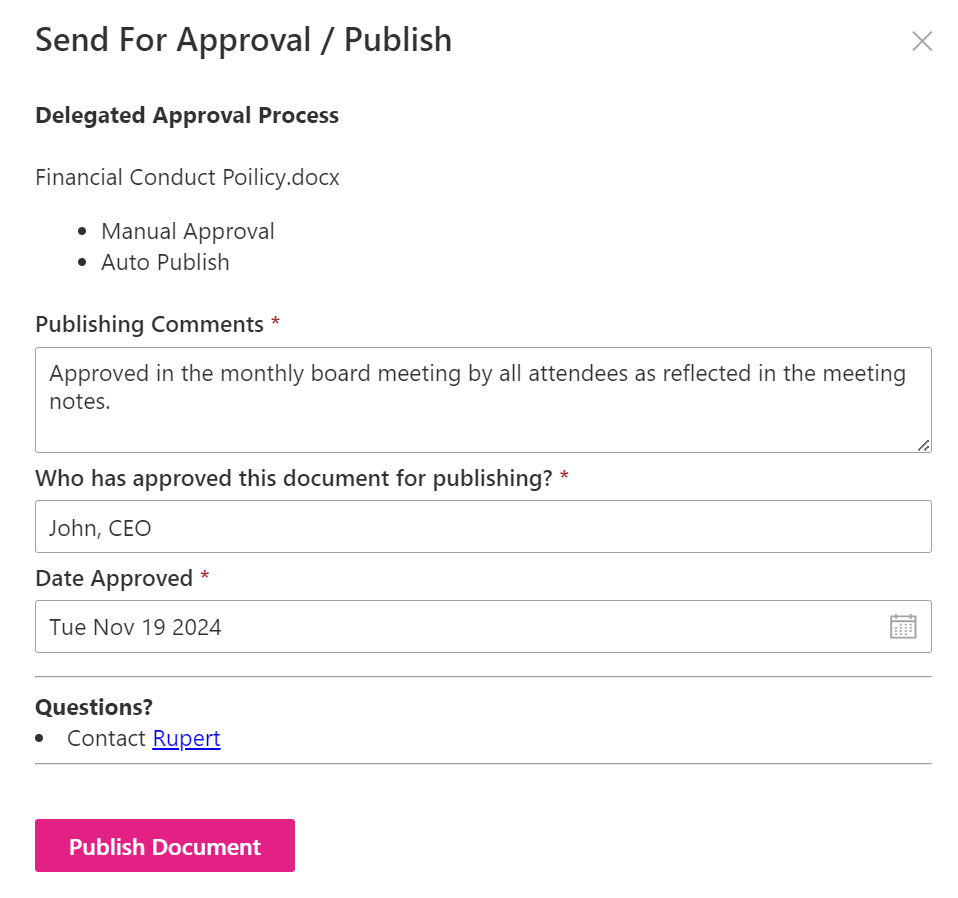
Policy Express supports delegated approvals, allowing a designated signatory to sign off on behalf of the committee. Key fields capture essential details like the approval date, decision-makers, and notes, ensuring a clear, auditable record.
Charity employees and volunteers often work outside traditional hours, so quick access to reliable policy content is essential, especially when policy owners aren’t immediately available to answer questions.
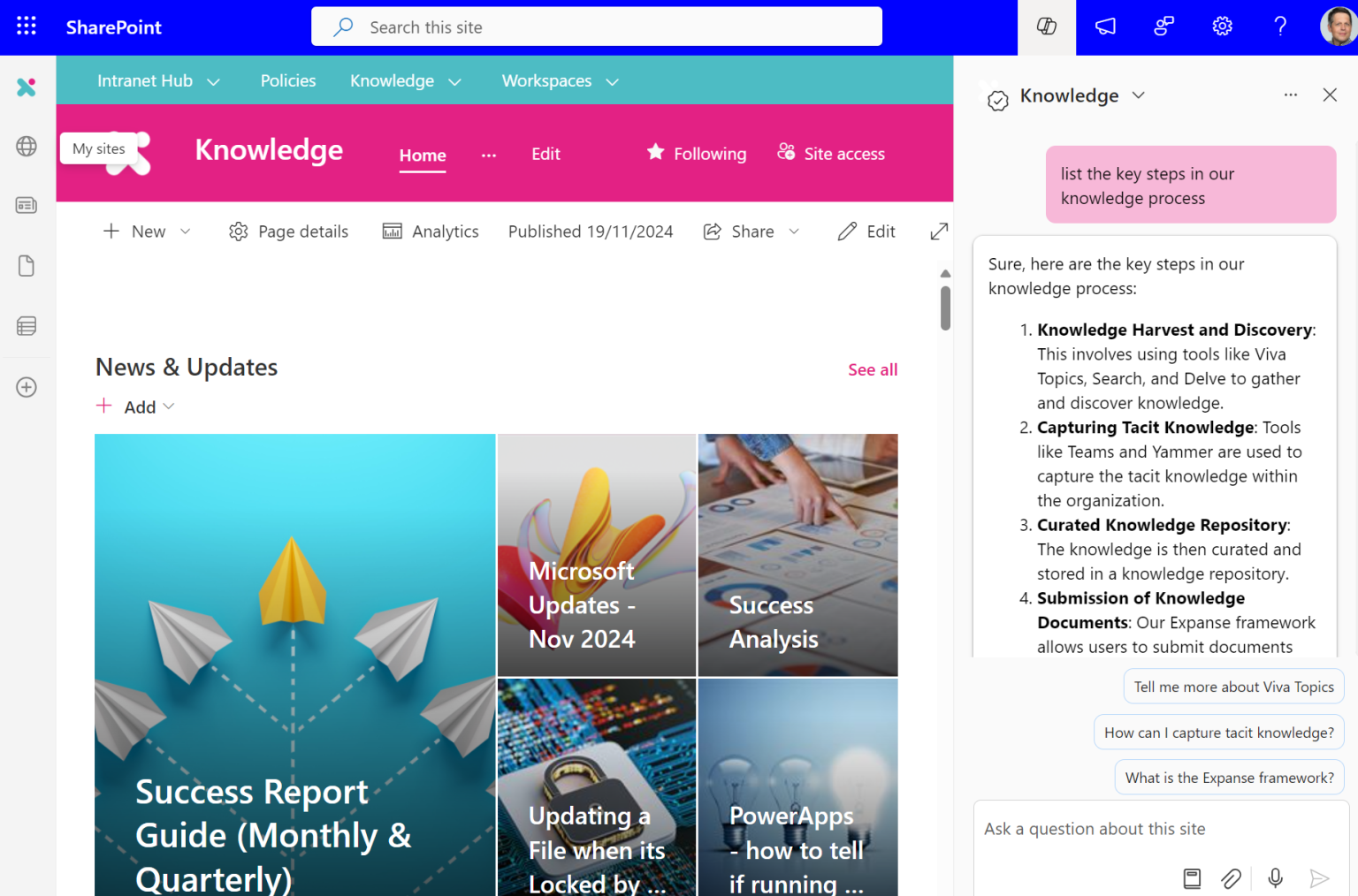
These approaches give employees confidence they’re using the latest policies with a search method that fits their working style, empowering them to make informed decisions and maintain high standards, regardless of their working hours.
In many charities, employees and volunteers may be required to formally acknowledge policies to confirm they have read and understood essential information. This attestation process is crucial for compliance tracking and accountability.
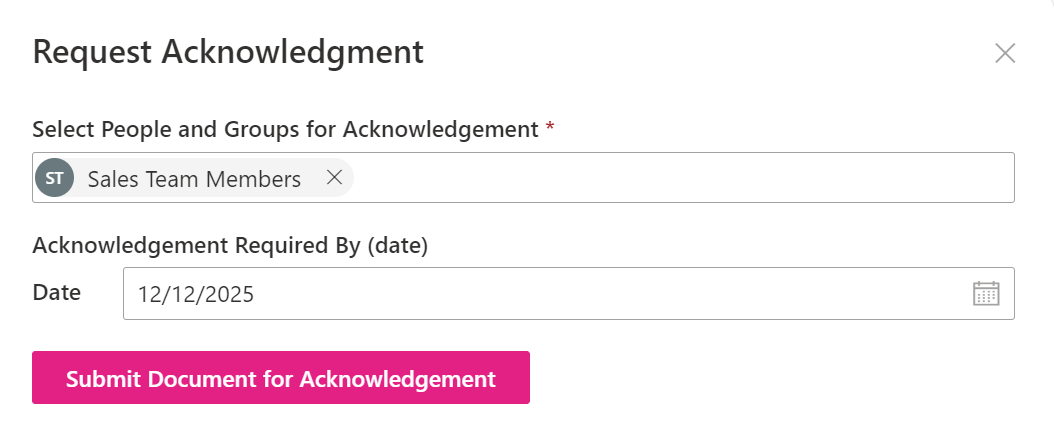
This process strengthens governance by ensuring that employees are aware of and aligned with the organisation’s policies, fostering a culture of compliance and responsibility.
A robust feedback process builds trust in the policy management system, making employees and stakeholders feel engaged and valued in shaping organisational policies. Feedback often focuses on:
Policy Express offers a user-friendly interface to simplify feedback capture, compiling a centralised log of all submitted feedback. Policy owners are automatically notified whenever new feedback is received, which allows for policies to be kept current.
In many charities, the policy review process often only begins after the review date has passed, exposing the organisation to compliance risks.
Policy Express supports timely policy reviews in three key ways:
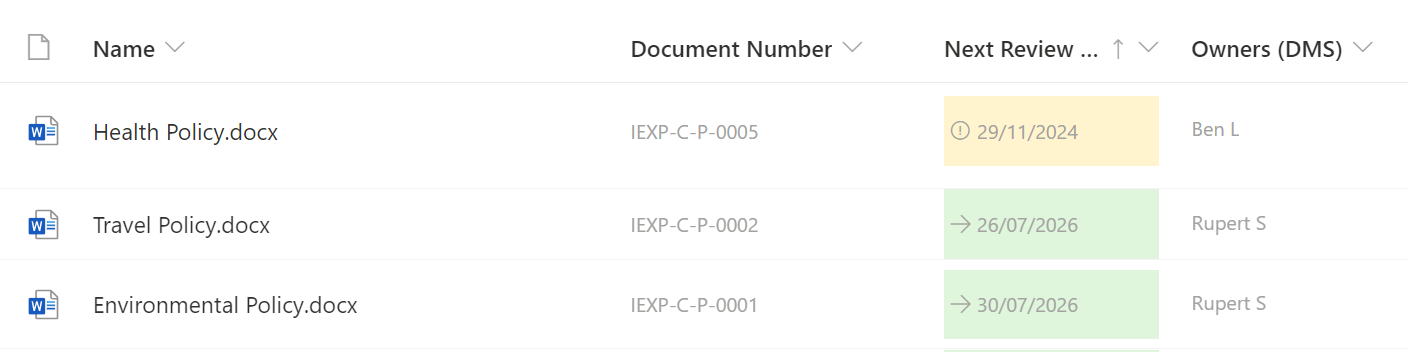
By centralising policy ownership, review schedules, and feedback, Policy Express helps charities stay aligned with compliance requirements and avoid lapses.
While all organisations need to manage budgets carefully, this is particularly crucial for charities. An effective policy management system drives cost savings in three key ways:
On the platform side, Microsoft offers low- and no-cost Microsoft 365 licences to charities, providing a familiar, financially sensible productivity platform.
Policy Express offers a competitive, non-subscription-based solution that is deployed directly into your SharePoint environment with a one-time fee, which includes:
Our ongoing Success Service is available to enhance support and includes:
Success Service is only required for the first year; after that, continued support is optional, providing flexibility for charities to manage costs effectively.
View pricing in GBP or USD.
Policy Express requires SharePoint Online; Microsoft licensing details are as follows:
Charities Up to 300 users
End users can access Policy Express with a Business Basic licence, available at no cost from Microsoft.
For Policy Authors, the best experience is achieved using Microsoft Office on the desktop, which is included with the Business Standard licence:
Charities Over 300 Users
For larger organisations, F3 or E1 licences are typically recommended for SharePoint access.
The Microsoft 365 E3 licence offers the best experience for Policy Authors, providing desktop access to Microsoft Office: